Transitional Canadian Landscape: Tipis, Elk, and Bursting Autumn Colors
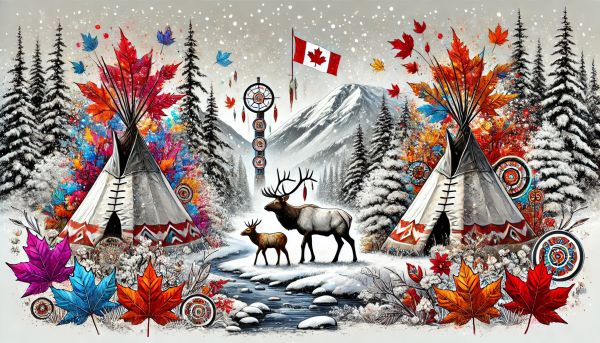
Crisp, cool air weaves through a vivid display of fall meeting winter in the majestic Canadian wilderness. Two traditional tipis, adorned with bold symbols integral to Canadian First Nation culture, anchor the scene, nestled amidst a flurry of fiery red and orange leaves that signal autumn’s peak. A family of elk, calm and poised, grace the foreground, blending perfectly with the serene setting. Their textured coats complement the stark whites of the encroaching winter snow and the dark, enigmatic pines. Overhead, the Canadian flag flutters proudly beside a detailed totem pole, contributing another layer of deep cultural significance and identity to the tableau. The backdrop reveals snow-capped mountains that pierce the horizon, hinting at the harsh, beautiful wilderness that defines this expansive country. This artwork not only captures the essence of a transitioning season but also honors the intricate history and spiritual symbology of Canada’s indigenous populations. *** About Canadian First Nation Tipis***: The tipi is a conical tent traditionally used by many of the Indigenous peoples of the Great Plains in North America. Made from buffalo hides and wooden poles, these structures are not only portable but also ingeniously designed to handle all weather conditions, symbolizing resilience and adaptability. For many indigenous cultures, tipis are more than just physical shelters. They serve as ceremonial spaces and are often adorned with symbols that reflect cultural beliefs, family values, and tribal identity. The representation in the artwork stands as a profound nod to these practices, imbuing the landscape with layers of historical significance and respect for these enduring traditions.
Image ID: 51225
|

 Canvas Prints
 Fine Art Printing
 Framed Prints
 Plaque Mounting
 Fabric Printing
 Metal & Wood Prints
 Plexi Face Mount
 Print & Dry Mounting
 Cityscape Prints
 Greeting Cards
 Classical Art Prints
 AGP Galleries

 Custom Picture Frames
 Canvas Floaters
 Wood Frames
 Metal Frames
 Canvas Transfer
 Custom Stretcher Frames
 Custom cut MatBoards
 Custom Plexi Cuts
 Custom Size Boards
 Pre-Cut Boards
 Framing Hardware
 Mirror Frames
 Upload Your Photos
 Ideas Gallery
 How it works?
  Artwork Scanning
 Laser Engraving & Cut
 Coffee Mug Prints
 Acrylic Blocks
 T-shirt Prints
 Handmade Oil Paintings
 All Products
 Custom Artist Canvas
 Custom Size Wood Panels
 Canvas Stretching Services
 Resources
 DoveTail Guide
 Aluminum Bars
 Wood Panels
 Stretcher Bars
 Easels & Display
 Resin Coatings
 Cork Rolls/Sheets
 Resin On Canvas
 Price Calculator
 Gift Certificates
 Collages on Canvas
 Word Cloud Design
 Photo Mosaics
 Image Effects
 FAQs
FAQs Pro Accounts
 Artist Gallery Program
 Corporate Art
 Contact KeenART
 Turnaround time
 Shipping
 Rush Orders